
Last updated November 16, 2026
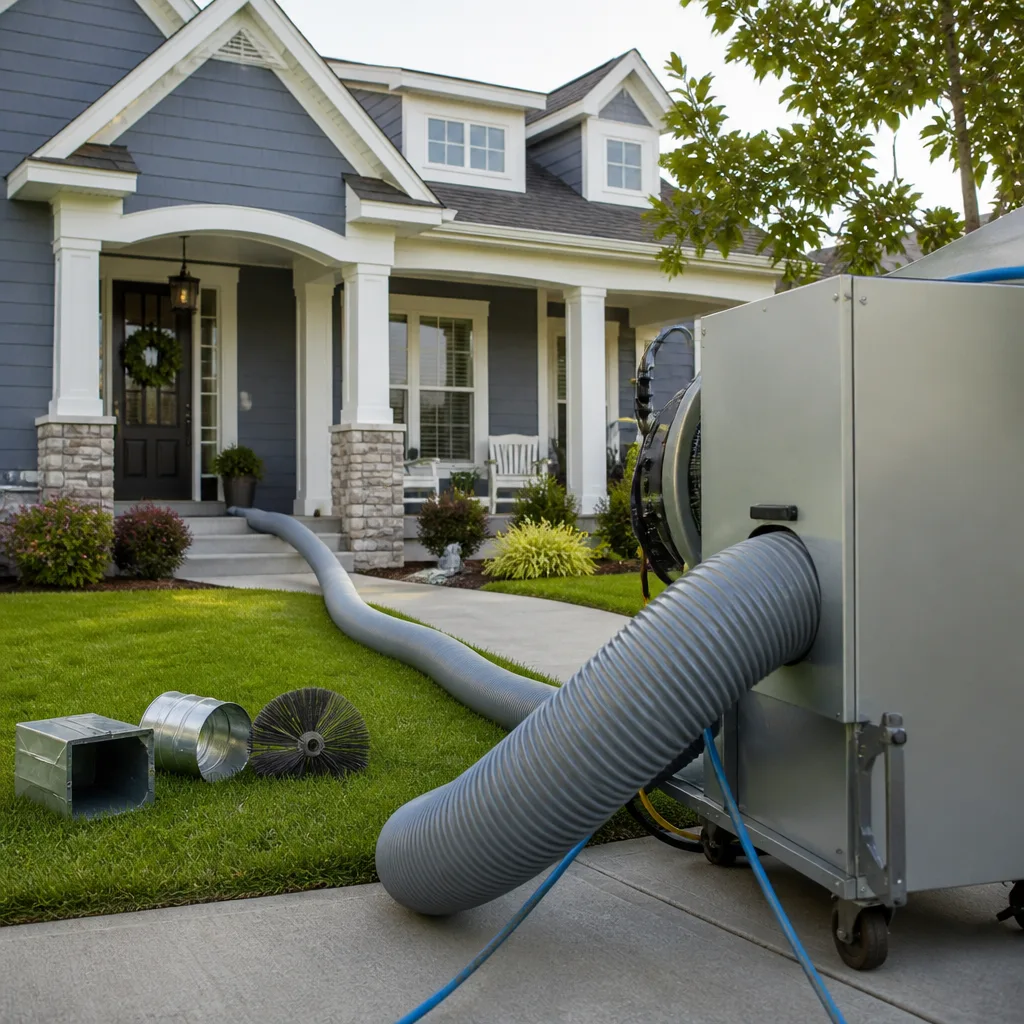 Whole-home duct cleaning
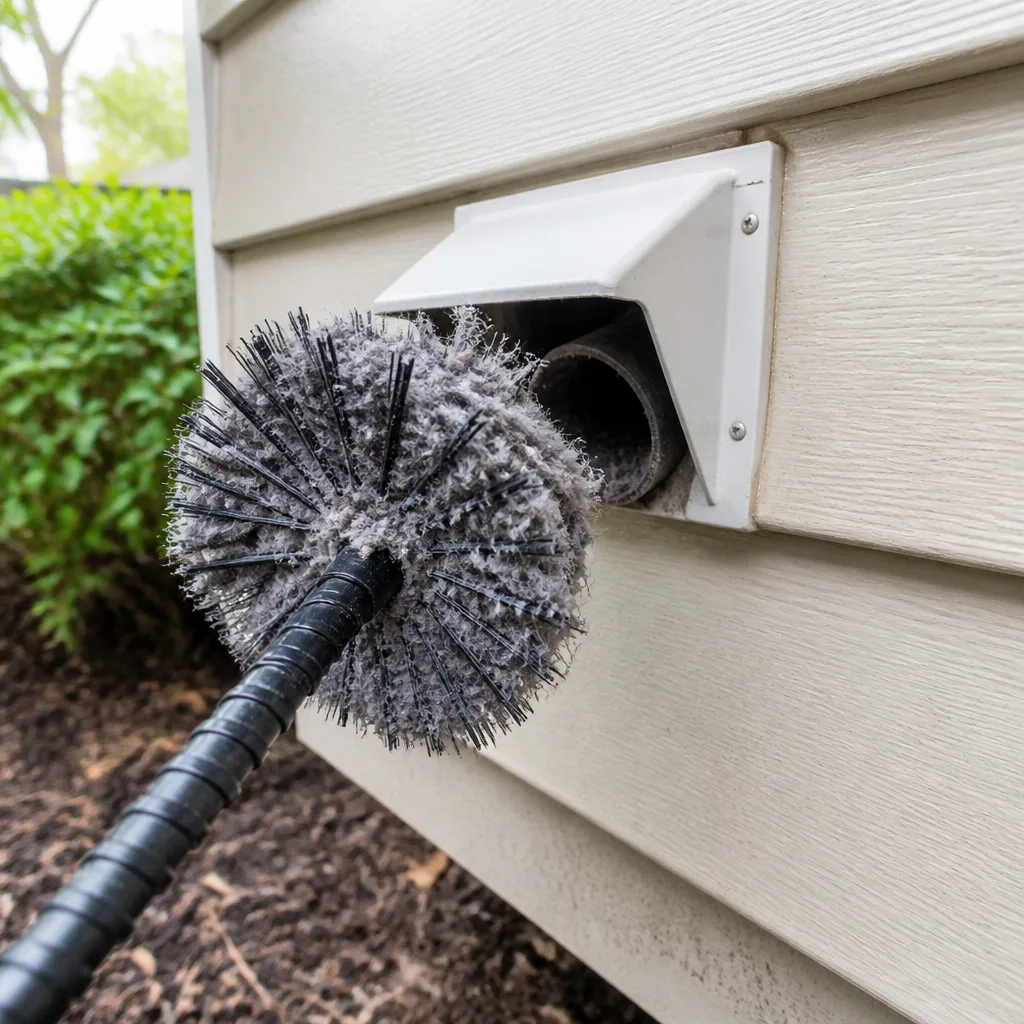 Dryer vent cleaning
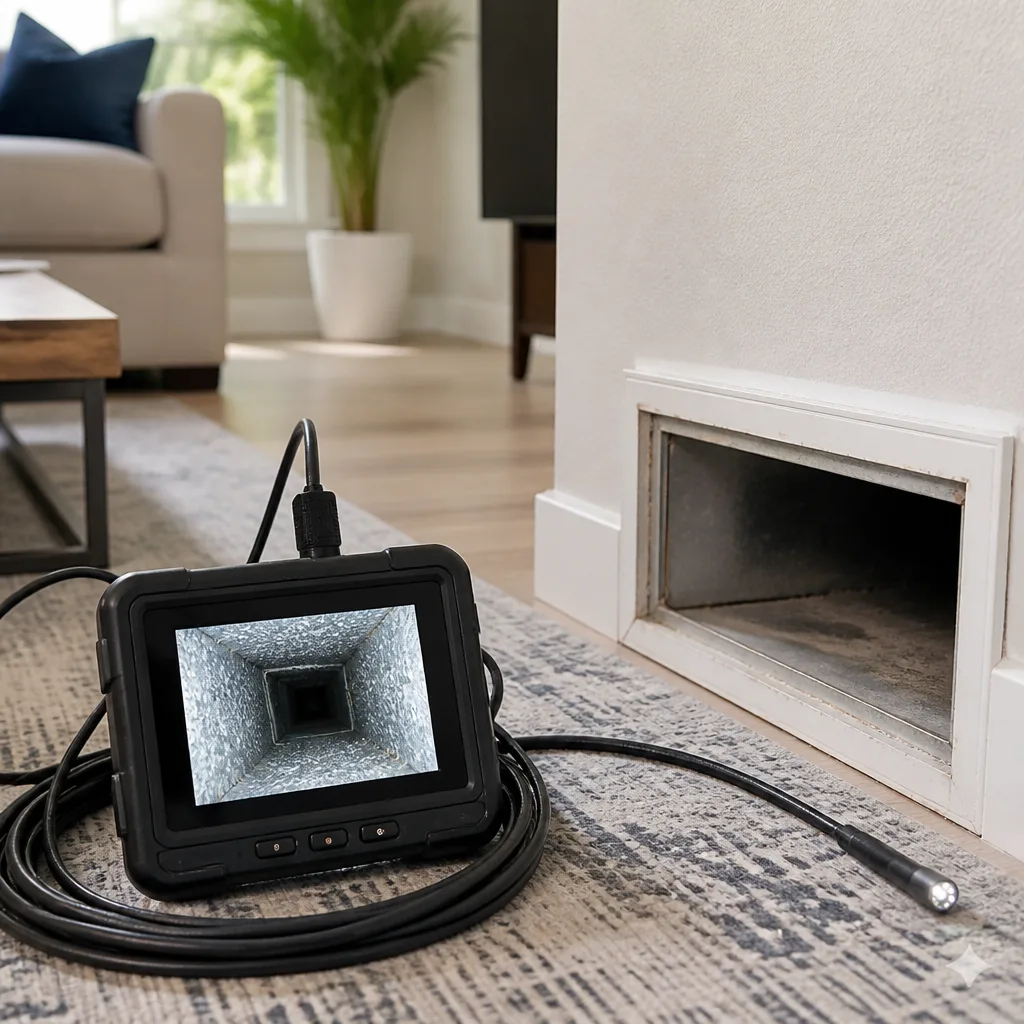 Camera inspection
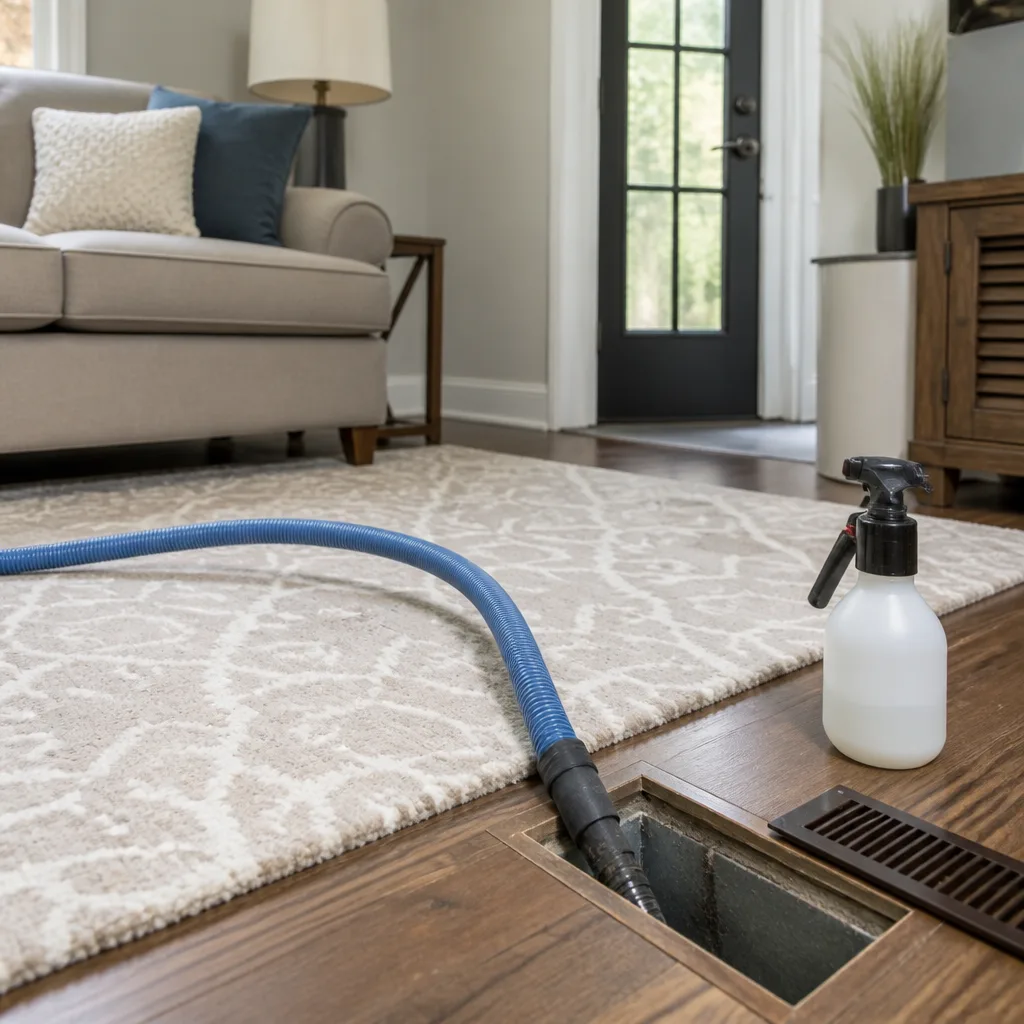 Sanitizing & deodorizing
Whole-system duct and dryer vent check with before-and-after photos - you see exactly what came out of your vents
That "$99 whole-house special" is a bait ad - the real number appears once they are in your hallway, or the "clean" is a shop-vac at the register. We photograph the inside of your ducts before and after instead.
DIY vs Professional Air Duct Cleaning: The Minneapolis Homeowner’s Decision Guide
Most advice on this subject splits into two useless camps: “never touch your ducts yourself” or “a shop vac will handle it.” Both miss the real point. DIY duct cleaning isn’t dangerous and it isn’t stupid. It’s just structurally limited, and knowing exactly where those limits fall is far more useful than a blanket rule in either direction. A shop vac and a dryer vent brush can genuinely maintain registers and short accessible runs. What they can’t do is create the 1,500 to 4,000 CFM of negative pressure that pulls debris from deep inside a duct system. Below, we break down what each approach actually reaches, when DIY is the right call, and when it quietly makes things worse. This is written for Minneapolis homeowners specifically, where the housing stock and the winters change the math.
Quick Answer
DIY air duct cleaning is adequate for register-level maintenance, accessible dryer vent runs under about 10 feet, and light surface dust in short runs you can physically reach. Professional cleaning is the correct choice when your Minneapolis home is older than roughly the 1980s, has flex duct or a complex branch layout, has visible mold, or when a trigger event like a renovation, water intrusion, or a recent purchase means you need the whole system addressed and verified rather than just touched at the openings.
Styles & brands we work with
- Whole-home duct cleaning
- Dryer vent cleaning
- Camera inspection
- Sanitizing & deodorizing
Table of Contents
- What DIY Tools Can and Cannot Reach
- When DIY Is Genuinely Adequate
- When DIY Is Counterproductive
- What You’re Actually Renting When You Hire a Pro
- Minneapolis Housing Stock and the Design of Your Duct System
- A Decision Framework: Four Factors That Should Move You
- The Inspection Step Most People Skip
- Common Mistakes to Avoid
What DIY Tools Can and Cannot Reach
A standard shop vac pulls somewhere in the range of 150 to 200 CFM at the hose. That’s plenty to clean a register boot. It’s not enough, and never will be, to move settled debris from the far end of a long branch run in a Minneapolis forced-air system. The gap isn’t about effort or persistence. It’s about physics.
Here’s the honest breakdown of what the common DIY tools actually do:
- Shop vac with a crevice tool. Excellent at the register face and the boot just inside it. Marginal to useless beyond the first bend, where the hose can’t reach and the suction has already decayed.
- Rotary brush kits on a drill or handheld driver. These loosen debris on the walls of the duct they can reach. The catch is that loosening without simultaneous extraction means you’ve moved dirt, not removed it. More on that below.
- Compressed air. It dislodges everything it touches and pushes it somewhere else in the system. Without a vacuum running at the other end, that “somewhere else” is usually the coil, the plenum, or your living room.
- Dryer vent brushes. Genuinely useful on short, straight, accessible runs. Struggles on anything with an elbow, a long horizontal stretch, or a roof termination.
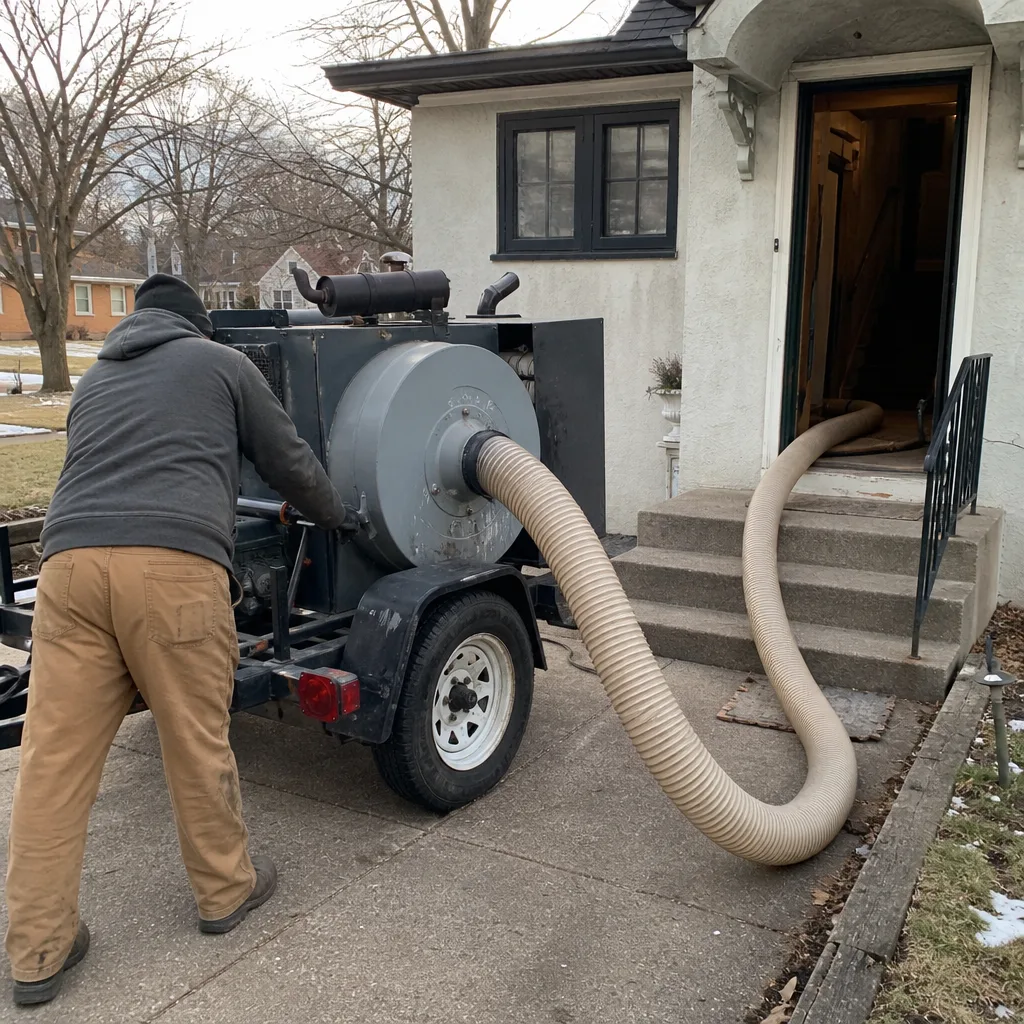
Now compare that to what professional systems do. A Rotobrush or Nikro setup combines a rotating, flexible brush head with high-capacity negative pressure running the whole time, so the debris is loosened and captured in the same motion. A truck-mounted or HEPA-equipped system creates the pressure differential that pulls material back toward the collection point from every branch. That’s the 1,500 to 4,000 CFM figure. Consumer equipment has no equivalent, and no amount of clever adaptation closes the gap.
What this means for a Minneapolis homeowner is simple: DIY addresses the visible openings of the system. Professional cleaning addresses the system. Those are two different jobs that happen to share a name.
When DIY Is Genuinely Adequate
We’re not going to pretend every duct cleaning call is essential. There are real situations where the right answer is a trip to the hardware store and an afternoon, and a professional cleaning would be money you didn’t need to spend.
DIY is genuinely adequate in these scenarios:
- Routine register maintenance. Wiping the face of the supply and return grilles, pulling the covers to clean the boot and first few inches, and vacuuming out visible dust is reasonable upkeep and takes fifteen minutes.
- Accessible dryer vent runs under 10 feet. If your dryer backs against an exterior wall and the vent goes straight out, a proper dryer vent brush and a shop vac can clear lint buildup effectively. Note the word straight. We get into dryer vent cleaning separately, but short and simple is the DIY-friendly case.
- Pre-inspection surface cleaning. If you’re planning a professional cleaning anyway, removing the loose dust from the grilles first doesn’t hurt, and it makes whatever the technician finds easier to see.
- Post-renovation touch-up on the returns. New construction dust that settled in the first few feet of a return can be cleared without renting equipment.
The common thread through all four is reach. If you can see it, touch it, and the debris sits within about two feet of the opening, DIY handles it. Past that point, the tool is no longer contacting the surface, and the job stops being cleaning and starts being wishful thinking.
One thing worth saying plainly: none of this is about saving money versus spending it. A homeowner with a newer build, a simple trunk-and-branch layout, and no complaints about airflow or air quality may go years without needing professional duct cleaning, and the register-level upkeep is genuinely enough. The question isn’t whether DIY is respectable. It’s whether it matches your system.
When DIY Is Counterproductive
This is the part of the guide most other write-ups skip. There are specific systems where DIY cleaning doesn’t just fall short. It actively makes the problem worse.
Older flex duct systems. Flex duct is corrugated, and debris collects in the ridges. A rotary brush generates dust and loosens it from the walls, but without simultaneous high-capacity extraction running the length of the system, the loosened material redistributes through the branches and settles somewhere new. Sometimes that’s a bedroom supply. Sometimes it’s the blower compartment. Either way, the homeowner just moved a problem rather than removing it. If your Minneapolis home has original flex duct from the 1980s or 1990s, this is the most common counterproductive DIY scenario we see described.
Mold-present systems. If there’s visible mold at a register or in a return plenum, do not disturb it. Agitation without containment spreads spores through the living space and into the HVAC equipment, where they can colonize the coil and the plenum insulation. This needs proper HEPA containment equipment, which is exactly what our Abatement Technologies setup is for, and it’s not a DIY situation. If you suspect mold, get it looked at before you touch anything.
Compressed air in a complex system. Blowing air into one end of a duct with no capture at the other is a redistribution tool, not a cleaning tool. In a simple system, the debris often finds its way out through a nearby register where you can vacuum it up. In a two-story Minneapolis home with long branch runs to a second floor, it tends to find a coil.
Systems with known duct damage. If there’s a disconnected joint, a crushed run, or a leak at a trunk connection, cleaning without repair just sends debris into the space around the duct. The air duct cleaning we perform includes identifying those compromised connections so they get repaired rather than cleaned around.
What You’re Actually Renting When You Hire a Pro
When a Minneapolis homeowner hires a professional cleaning, they aren’t renting “a bigger shop vac.” They’re renting a specific set of capabilities that don’t have consumer equivalents, and it’s worth knowing what those are so you can tell a real operation from a guy with a hose.
- High-capacity negative pressure. The system that pulls 1,500 to 4,000 CFM creates a pressure differential through the whole duct system. That’s the actual mechanism for removing settled debris from deep runs, and it’s what separates cleaning from surface work.
- Rotating brush systems designed for duct interiors. Rotobrush and Nikro equipment uses flexible shafts and brush heads engineered to follow duct geometry, including elbows and transitions, while extraction runs concurrently. The brush and the vacuum work together as one tool.
- HEPA containment. Abatement Technologies equipment captures what’s being dislodged at the point of disturbance, so the cleaning process doesn’t become an air quality event in your home. This is important for anyone with respiratory sensitivity and essential for mold or heavy contamination jobs.
- Camera inspection. A camera run through the ductwork shows what’s actually in there and confirms the cleaning actually happened. You can see the before and after, which is the honest answer to the “how do I know it was done” problem.
- Access equipment and repair capability. Knowing where to cut in, how to reseal, and how to identify a duct that needs repair rather than cleaning all require the right tools and the training to use them. Our technicians have up to 14 years of experience, and that experience is mostly about knowing when to stop and fix something instead of just cleaning it.
The other thing you’re renting is accountability. A written scope, a defined system, and before-and-after photos of your own ducts exist because professional services can be held to a standard. DIY has the same owner for both the work and the verification, which is comfortable but not very rigorous.
Minneapolis Housing Stock and the Design of Your Duct System
Minneapolis is a city with a wide range of housing ages. That range matters here, because the duct system in a 1920s south Minneapolis bungalow has almost nothing in common with the one in a 1990s build in a first-ring suburb, and the DIY-versus-professional answer changes with the system.
A few local realities to keep in mind:
- Older homes often have retrofitted duct systems. A house built before central air was standard often got its ducts added later, which means more transitions, tighter clearances, and sometimes runs that don’t follow the optimal path. Complex retrofits are harder to clean DIY and easier to clean with proper access equipment.
- Long heating seasons mean more runtime. Ducts in Minneapolis run hard from fall through spring. That runtime is what moves the dust, so buildup tends to be heavier than in milder climates with less furnace operation.
- Basement returns and cold-air drops. Many Minneapolis homes have ductwork crossing unconditioned basement space. Those runs are often the worst offenders for settled debris and the least accessible from above.
- Winter humidity swings. Dry heated air in winter and humid summer air both stress duct connections and insulation over time. A joint that was fine in 1990 may be a leak now, and cleaning without checking the joints doesn’t fix it.
None of this is unique to Minneapolis, but the specific combination of older housing, long heating seasons, and retrofitted systems makes the professional-cleaning case stronger here than it might be in a newer Sun Belt subdivision. If you want to talk through your specific system, our Minneapolis service page lays out what we cover.
A Decision Framework: Four Factors That Should Move You
Instead of memorizing rules, work through these four questions about your own house. Any single one of them can tip the decision toward professional cleaning, and two or more makes it clear.
- How old is the house and the duct system? Built after 2000 with original ducts? DIY register maintenance is probably all you need for now. Built before 1990, or the ducts were retrofitted? The system is more complex than it looks and probably needs professional attention at least once.
- What kind of duct system is it? Simple trunk-and-branch in accessible attic or basement space is DIY-friendlier. Flex duct, long runs, multiple zones, or a system that disappears into finished walls is not.
- Is there a trigger event? Recent renovation, water intrusion, a new-to-you house, a new baby, a family member with respiratory concerns, or a persistent musty smell. Any of these means you need the whole system addressed and verified, not just the registers.
- Are there occupant health factors? Asthma, allergies, immune compromise, or allergies to mold specifically. If yes, the DIY margin shrinks considerably, and the containment capability professionals bring becomes the deciding factor.
If you answer “no” to all four, and your ducts are relatively clean and simple, DIY maintenance is a reasonable ongoing practice. If you answer “yes” to any of them, the honest recommendation is to get a professional assessment before you start. A proper inspection will tell you whether the job actually needs doing, which is more valuable than either a blanket “yes” or “no.”
Two additional triggers that push the answer clearly toward professional: any visible mold, and any dryer vent that isn’t short and straight. Both are safety issues rather than comfort issues, and DIY has no good answer for either.
The Inspection Step Most People Skip
Before you decide anything, look at the system. Not to clean it. To understand it. This is where most homeowners go wrong, because they decide DIY-or-pro before they know what’s actually in the ducts, and the decision gets made on guesswork.
What a proper inspection involves:
- Opening and looking into every accessible register. Note whether you see dust, debris, or discoloration beyond the boot.
- Running a camera or a strong light into the first few feet of the trunk. You’re checking for settled debris, moisture, mold, or disconnected joints. A yardstick with a flashlight taped on works for a rough impression.
- Checking the return plenum and the filter slot. A heavily loaded filter slot suggests upstream debris that professional cleaning should address.
- Looking at the dryer vent separately. Confirm whether the run is straight and short, and whether there’s any lint outside the termination.
If the inspection shows light dust at the registers and clear, accessible runs, DIY is the correct answer. If it shows heavy accumulation, mold, disconnected sections, or a complex layout, the answer is professional service. The inspection is what makes the decision a fact-based one rather than a coin flip.
This is also where the containment and camera capabilities we mentioned earlier earn their keep. A professional inspection confirms what the cleaning will involve before any work begins, so the scope and price are set by what the system needs, not by a guess made over the phone.
Common Mistakes to Avoid
- Running compressed air into a system with no vacuum capture. It redistributes debris into the coil and the branches rather than removing it. If you can’t see where the debris will be captured, don’t send air into the system.
- Agitating flex duct with a rotary brush and no simultaneous extraction. The ridges hold debris, and loosening it without pulling it out just relocates the problem. Flex duct is the most common example of “looked clean, wasn’t.”
- Disturbing visible mold without HEPA containment. Mold spores spread with any air movement, and once they reach the coil, they’re a much bigger problem than they were in the register. Stop and get a professional inspection.
- Cleaning around a known duct problem instead of fixing it. A crushed run or a disconnected joint will undo the cleaning almost immediately. Repair and cleaning belong in the same scope, which is why we handle Clover Air Duct Cleaning cleaning and duct repair together rather than treating them as separate projects.
- Buying a cheap duct cleaning coupon that doesn’t cover what you need. A teaser price usually means a register-level pass and an upsell once the technician is on site. Ask what the price includes and what the system scope is before you book anything.
- Treating the dryer vent as a DIY project when the run isn’t short and straight. Elbows, long horizontal runs, and roof terminations accumulate lint in ways brushing from one end can’t clear. This is the safety side of the question and it’s easy to underestimate.
- Assuming “newer house” means “clean ducts.” New construction dust can take a year or more to settle out, and a recent renovation in an older home re-seeds the ducts with construction debris. Trigger events override system age.
- Doing it once and never again. A register-level cleanup in fall and a proper professional cleaning every few years, based on the inspection, is a more practical schedule than trying to set a fixed interval. Most homes need professional duct cleaning far less often than a coupon-driven industry would suggest.
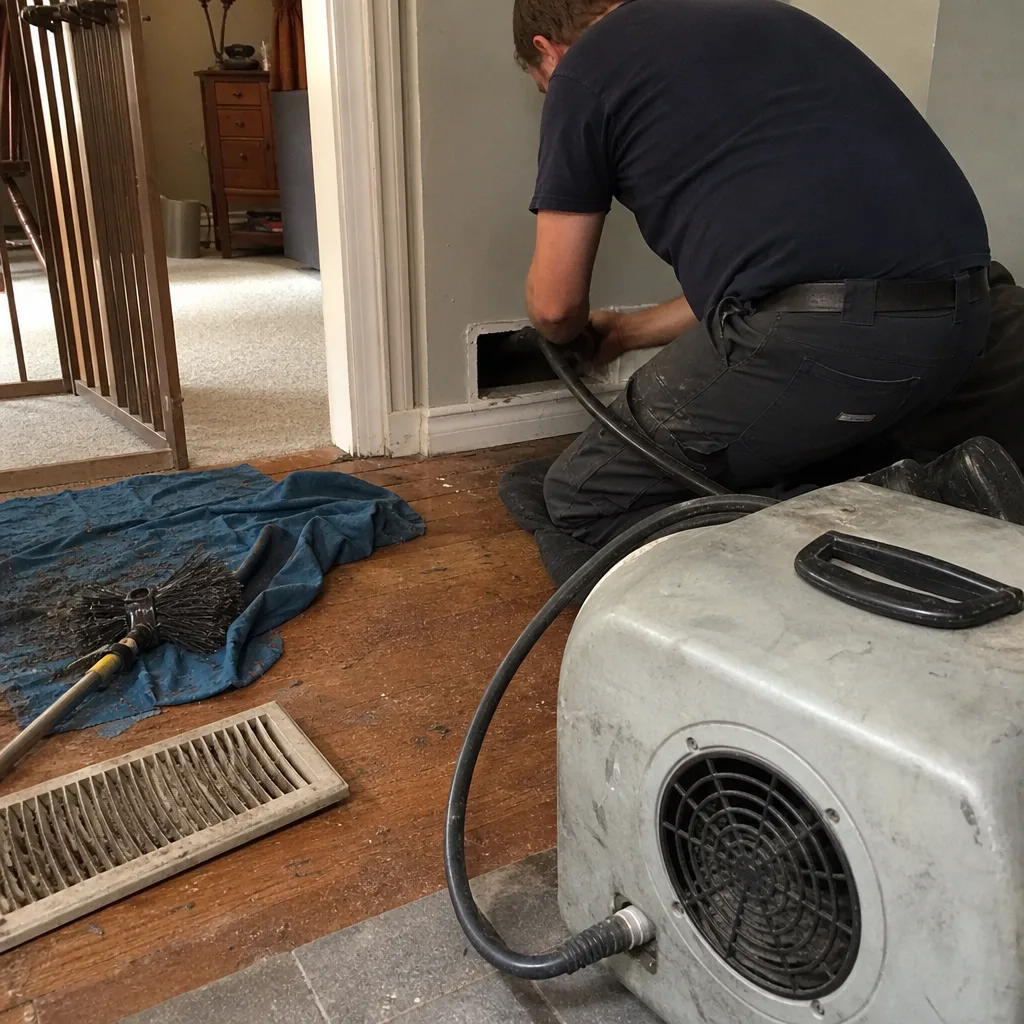
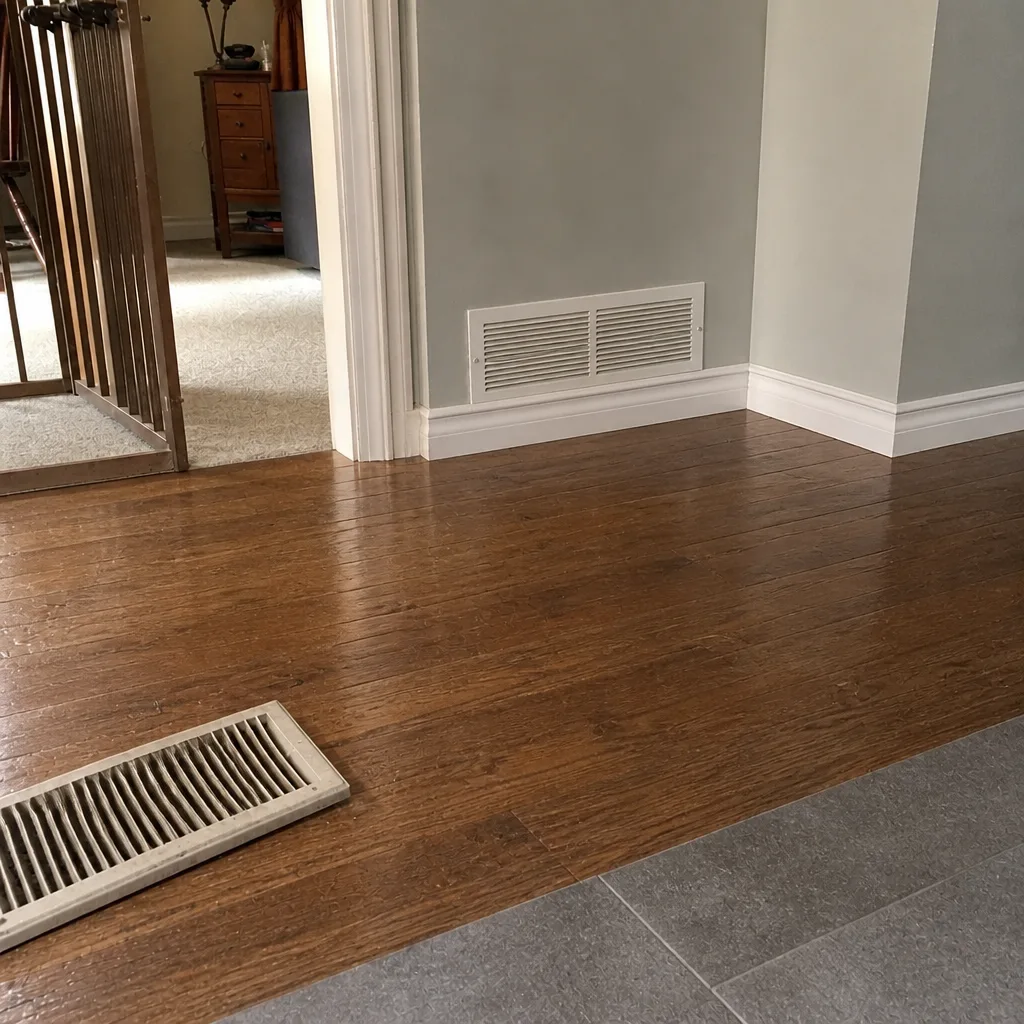
See the difference
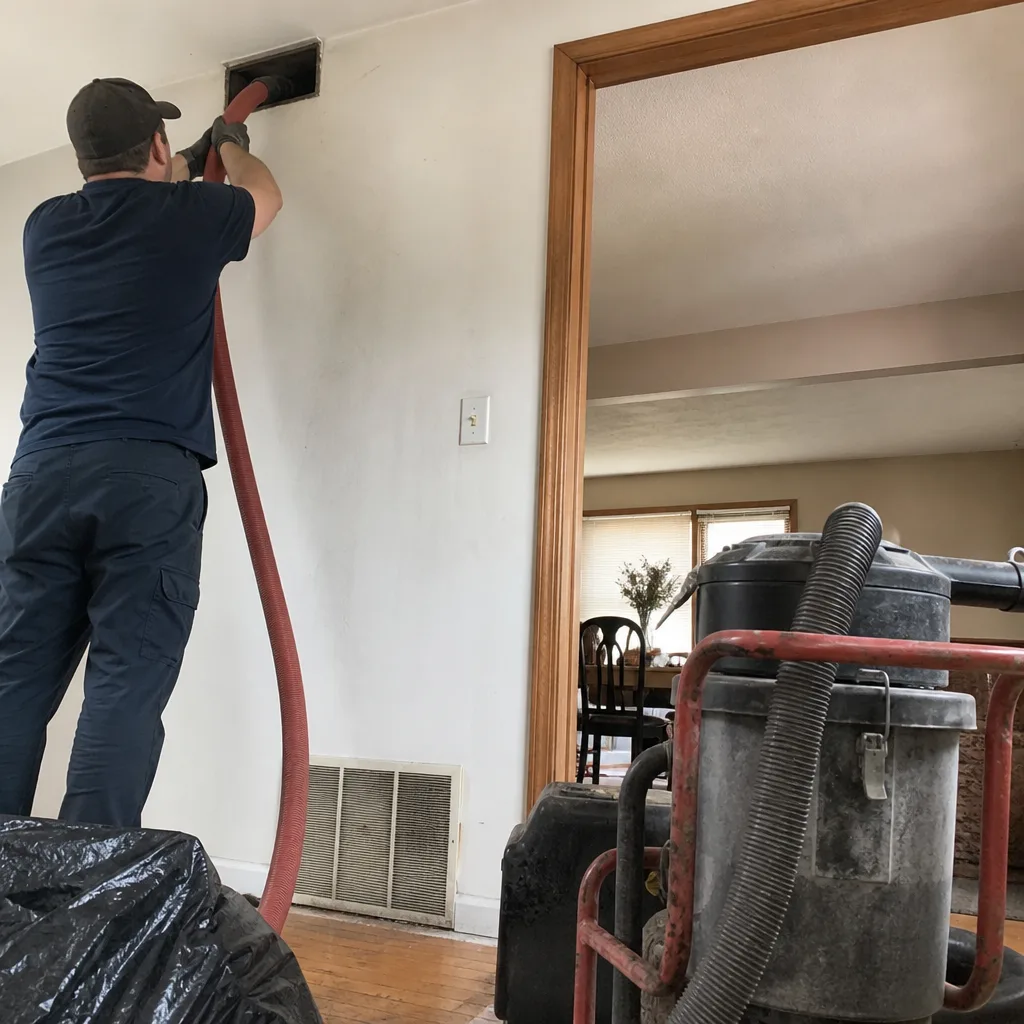 Before
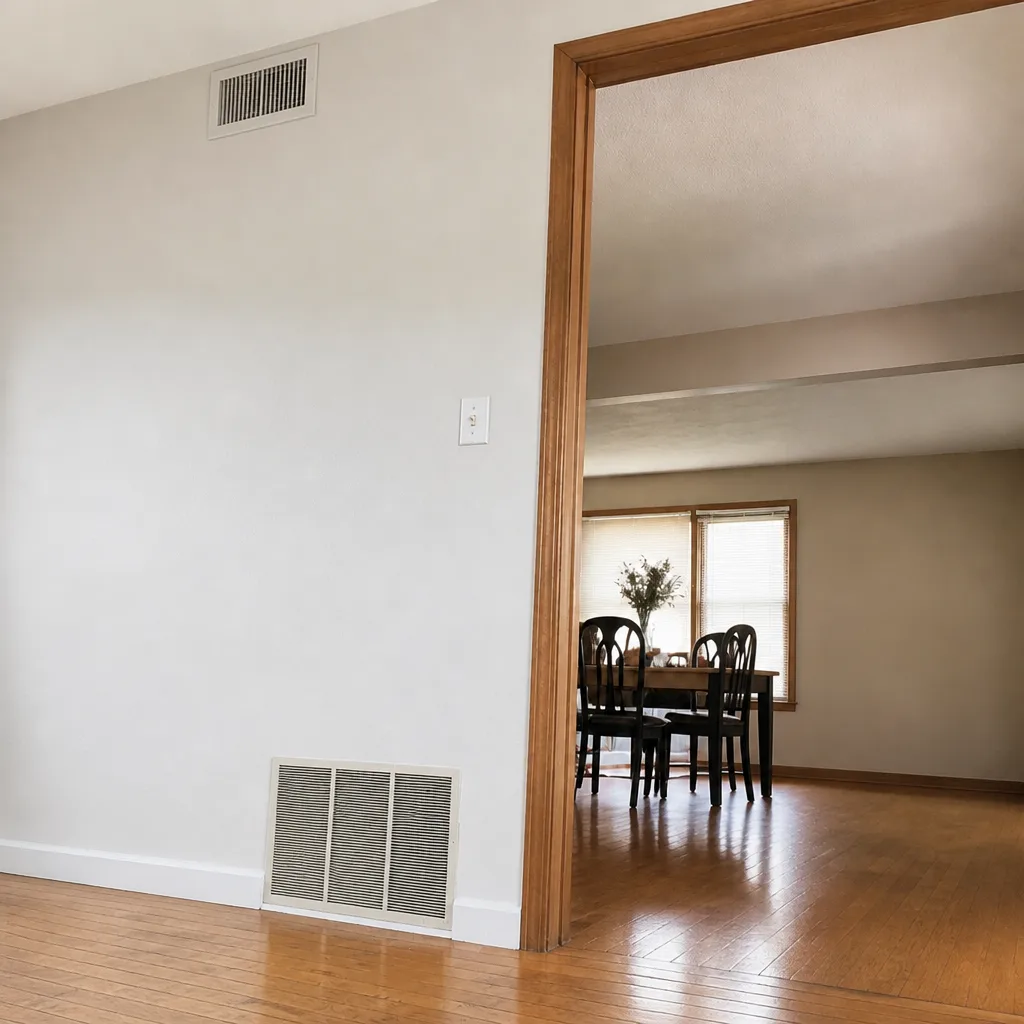 After
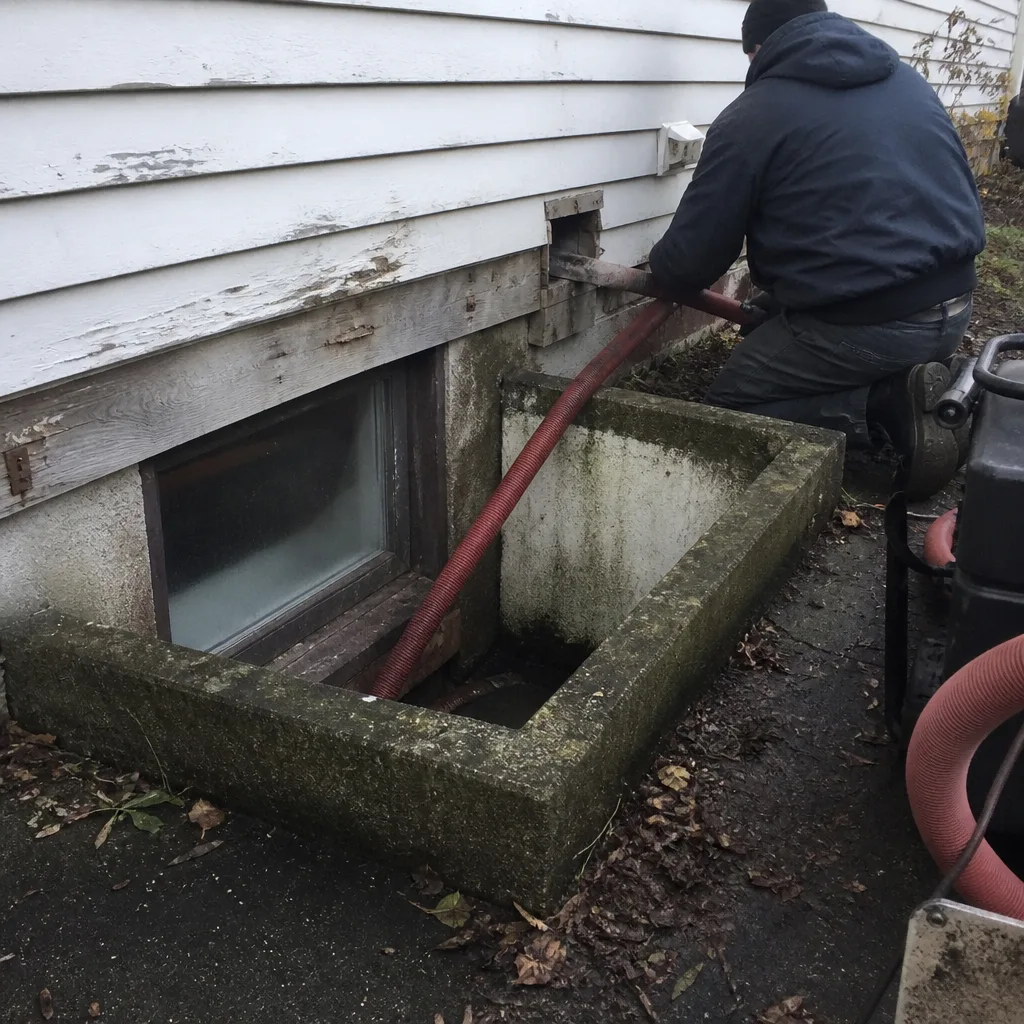 Before
 After
 Before
 After
When to Call a Professional
Call a professional when any of the following are true: your Minneapolis home is older than roughly the 1980s and has never had the ducts cleaned; the system uses flex duct, has long runs, or disappears into finished walls; you’re seeing visible mold; you’ve had a renovation, water intrusion, or a recent home purchase; someone in the household has respiratory concerns; or your dryer vent isn’t short and straight. In each of these, DIY is either inadequate or counterproductive, and the right equipment and containment matter. Clover Air Duct Cleaning offers free estimates in Minneapolis. Call (844) 320-5410. We answer 24/7. Fast dispatch from 7am to 7pm, Sunday through Friday. Every job gets one flat price per system, agreed before work starts, plus before-and-after photos of your own ducts.
Frequently Asked Questions
You can maintain the registers and the first few inches of the duct with a shop vac, and that’s useful upkeep. You cannot reach the deep runs or the settled debris in the middle of the system, because a shop vac doesn’t create enough negative pressure to pull it out. Register-level maintenance, yes. Whole-system cleaning, no.
Because they’re often quoting a different job than you think you’re buying. A low teaser price usually covers a surface pass on the registers, not the whole system, and it becomes a larger invoice once the technician is on site and finds the actual scope. Ask upfront what the price includes, whether it’s one flat price for the whole system, and whether you’ll get before-and-after photos. Call (844) 320-5410 for an honest whole-system estimate.
Before-and-after photos of your own ducts, taken during the job, are the simplest proof. Ask before you book whether the company provides them and whether the price is fixed per system rather than per vent. A professional operation has nothing to hide about the scope, and camera inspection confirms what was actually in the system.
Yes. Agitating mold without HEPA containment spreads spores through the living space and into the HVAC equipment, where they can colonize the coil and insulation. If you see mold at a register or in the return, don’t touch it. Get a professional inspection with proper containment first.
There’s no universal interval. Most Minneapolis homes don’t need it every year, and some go a decade or more between cleanings. Base the schedule on the inspection instead of a marketing calendar: trigger events like a renovation, a new home purchase, water intrusion, or visible mold are more reliable indicators than the calendar.
It’s okay if the run is short, straight, and accessible from outside, under roughly 10 feet with no elbows. If the run has bends, is long, or terminates on the roof, brushing from one end won’t clear the lint that matters, and that’s the safety risk most companies ignore. Ask for a proper dryer vent inspection in that case.
High-capacity negative-pressure systems creating 1,500 to 4,000 CFM, Rotobrush and Nikro duct cleaning systems designed to work inside the duct while extracting, HEPA containment from Abatement Technologies for jobs involving heavy contamination, and camera inspection equipment. The consumer market doesn’t have equivalents for any of these, which is the honest reason the two approaches address different portions of the problem.
The Bottom Line
DIY duct cleaning isn’t dangerous and it isn’t a scam. It’s just limited to what you can physically reach with equipment that produces a fraction of the pressure a professional system generates. For register-level upkeep, short dryer vent runs, and light surface dust, it’s the right call. For older Minneapolis systems, flex duct, mold, trigger events like renovation or water intrusion, and any occupant health concern, it’s the wrong tool for the job, and in some of those cases it actively makes things worse. Run the inspection first, then decide. The decision should come from your system, not from a coupon.
If you want a straight answer about your own home, call Clover Air Duct Cleaning at (844) 320-5410 for a free estimate. We answer 24/7. Fast dispatch from 7am to 7pm, Sunday through Friday. Licensed and insured, one flat price per system agreed before work starts, and before-and-after photos of your own ducts when we’re done.
Written by the team at Clover Air Duct Cleaning.